Visit at Würzburg Baskets

Last week, thanks to a friend of mine, I had the opportunity to spend some time at the youth academy of Würzburg Baskets, which is connected to the professional club competing in Germany’s top basketball league, the Basketball Bundesliga (BBL). The academy was founded in 2011, and its main goal is to develop players for professional basketball.
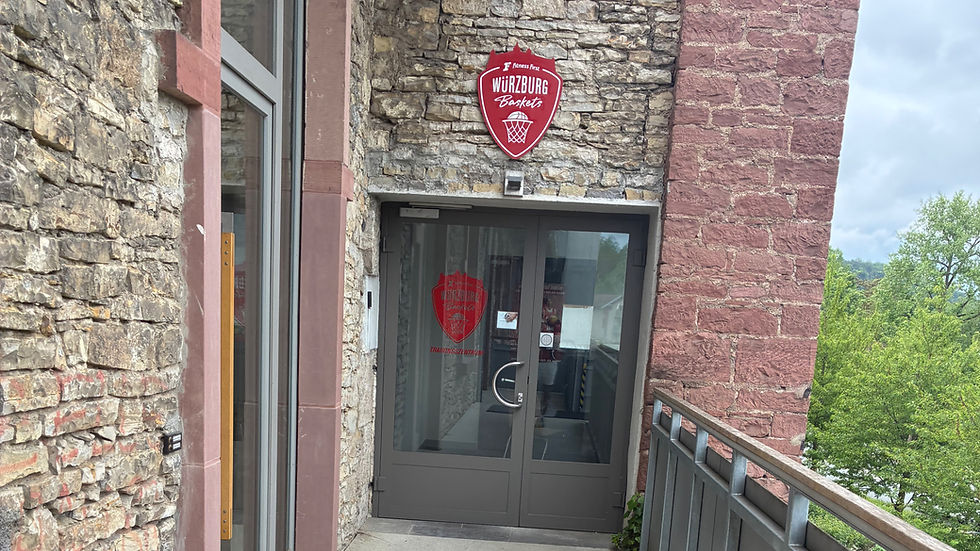
The most famous name connected to Würzburg is, of course, Dirk Nowitzki, who developed there as a player. However, the academy has also produced Maximilian Kleber, currently playing for the Los Angeles Lakers, former German national team player Max Ugrai, and Hannes Steinbach, who currently plays NCAA Division I basketball for the Washington Huskies and is projected to be selected in the top 15 of the first round of the NBA Draft.
Training Center in a Former Brewery
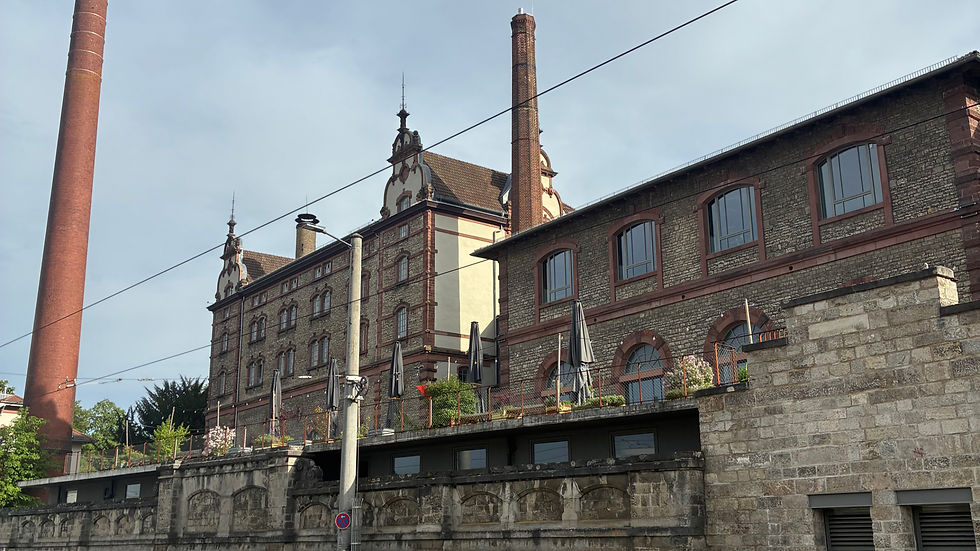
The training center is located inside a renovated old brewery, which today serves as a commercial and sports complex.
After entering and walking through a hallway filled with photos of well-known Würzburg Baskets figures, you arrive at the main lobby, which includes a modern gym, cryotherapy chambers, a bar area, entrances to the locker rooms, and the basketball court itself. On the upper floor, there are offices designed as an open space, allowing staff to overlook the gym area, which gives the entire facility a very welcoming and “home-like” atmosphere. The gym contains two full-sized basketball courts and a total of six baskets. However, due to the limited space between the courts, the facility is effectively used for only one team practice at a time.
How Does the Academy Work?
The academy system starts with introductory basketball programs for young children. As players move up through the system, the teams compete in the Bavarian league at the U12 and U14 levels, in JBBL (Germany’s top U16 league) at the U16 level, and in NBBL (Germany’s top U19 league) at the U19 level. The structure also includes a ProB team, which serves as a development team where young players gain experience competing against adults. ProB is the third-highest basketball division in Germany.
The academy represents the top of the regional basketball pyramid and works very closely with surrounding clubs. Every year at the end of the season, they organize open try-outs for all age categories from U12 to U19. The try-outs usually consist of one to three practices, depending on the decision of the coach responsible for that age group.
Players receive information about the try-outs through their home clubs, but registration is also publicly available on the academy’s website, meaning basically anyone can apply. On different try-out days, more than 30 players may attend, while only around 15–20 players make the final roster.
Interestingly, try-outs are attended not only by new players, but also by players who were already part of the academy in previous years. That is why cooperation with local clubs is so important for the academy. Even while playing for the academy, players still attend at least one practice per week with their home club and often continue to play games for them as well. This ensures that if a player eventually leaves the academy, they still maintain strong relationships and have a place to return to.
When it comes to player selection, height is naturally an important factor. In the younger age categories, coaches focus heavily on physical potential, even if the player does not yet possess advanced basketball skills. In the older categories, however, players are expected to combine physical attributes with strong basketball skills and mobility.
Training Process
The U12 and U14 teams practice 2–3 times per week, in addition to one practice with their home club. Especially with younger players, the coaches intentionally leave room for other sports and hobbies in order to support overall athletic development.
Practices last between 90 and 120 minutes and are complemented several times a week by athletic development sessions lasting 30–45 minutes. In the older age categories, players usually practice 4–5 times per week, although the exact schedule depends on the weekly program. Individual workouts are also a standard part of the development process.
Surprise: The Professional Team Practices Only Once Per Day
One of the biggest surprises for me was the training structure of the professional BBL team. The team practices are only once per day, which was something I had never seen before in professional basketball. However, it is important to mention that the entire block lasts up to four hours and includes meetings, gym, team practice, and individual work before and after practice. On top of that, players also complete their own individual workouts outside of the team schedule.
The head coach explained it to me by saying that some players commute up to 30 minutes to practice, and he does not consider it reasonable for them to travel back and forth several times a day.
“Players give you something. They give you their time and energy, so you also have to give them something back. And this was one way to do it.”
Personally, I find it to be a very interesting model that gives players more free time and additional space for recovery. Whether it is the better approach or not is difficult to say. However, the coach has been with the team for five years, and during the last three seasons they have qualified directly for the BBL playoffs every single year — so it clearly works.
Meeting with Saša Filipovski
Another very interesting experience was a short meeting with Slovenian coach Saša Filipovski, who during his career has coached clubs such as AS Monaco Basket, KK Partizan, and Banvit, with whom he reached the finals of the Basketball Champions League. Throughout his career, he has won two Slovenian league titles, two Polish league titles, the Turkish Cup, and was named Coach of the Year in Poland three times.
From our short but very inspiring conversation, I took away several interesting thoughts:
You have to adapt to the environment and culture you are working in. French players are highly athletic, Germans are physical, Spaniards are fast, and in Poland, players with individual skills tend to stand out more.
You can't play an overly complicated system full of set plays with American players — the game needs to be simplified more.
Basketball and players are constantly evolving, and if a coach does not want to fall behind, his basketball philosophy must evolve as well.
Young coaches often want too much too quickly and can easily become frustrated or emotional. With experience, however, you realize that it is sometimes better to approach situations calmly and with a clear mind. As the saying goes: the morning is wiser than the evening.


Comments